Connecting Manufacturers to Second Chance Talent Pools
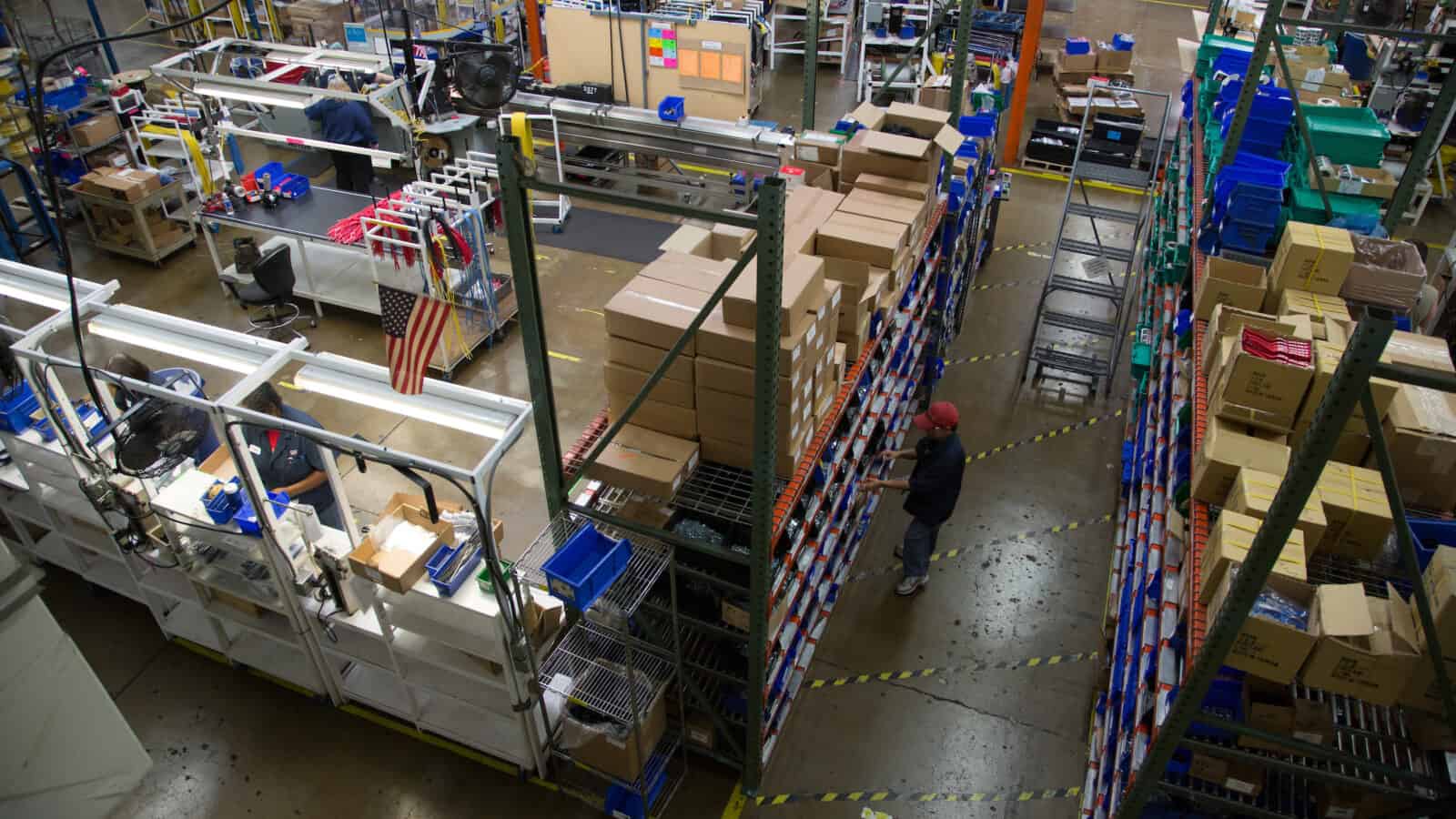
Walk into a classroom inside a Texas Department of Criminal Justice facility, and you might mistake it for a manufacturing shop floor. Students are learning hands-on, building the skills manufacturers need—a talent pipeline taking shape inside the state’s prison education system.
As manufacturers face persistent workforce gaps, the MI is helping them tap into new talent pools. A new project in Texas shows that work in action, connecting manufacturers to a highly skilled second chance workforce.
The work: The MI helps manufacturers solve their toughest workforce challenges with practical, employer-tested solutions. Second chance hiring is a core piece of that work.
- One-in-four Americans possess a criminal record. Manufacturers are well-positioned to welcome people ready for a second chance, closing the industry’s skills gap while strengthening communities.
- Through webinars, case studies and research, the MI helps manufacturers understand the unique challenges second chance talent faces and develop recruitment and retention strategies that support long-term success.
A case in point: The MI is a partner in the Vera Institute of Justice’s Career Pathways in Manufacturing project, which will build pipelines between correctional facilities and manufacturing careers in Texas.
- Texas manufacturing jobs grew by nearly 11% over the past decade. The Windham School District—the only standalone school district in the country dedicated to educating people in prison—has built a skilled talent pool to meet this demand, but more manufacturers need to tap into it.
- By partnering, the MI and Vera multiplied years of second chance experience into something neither could have built alone.
Putting the network to work: The MI brought Toyotetsu Texas (TTTX) Vice President of Administration Leslie Cantu, a champion of second chance hiring, onto the project. Her firsthand experience building a successful second chance pipeline at TTTX provides the coalition with a manufacturer’s perspective and insights.
- In this way, the MI acts as a connective tissue, ensuring manufacturers have a say in the pipelines being built for them.
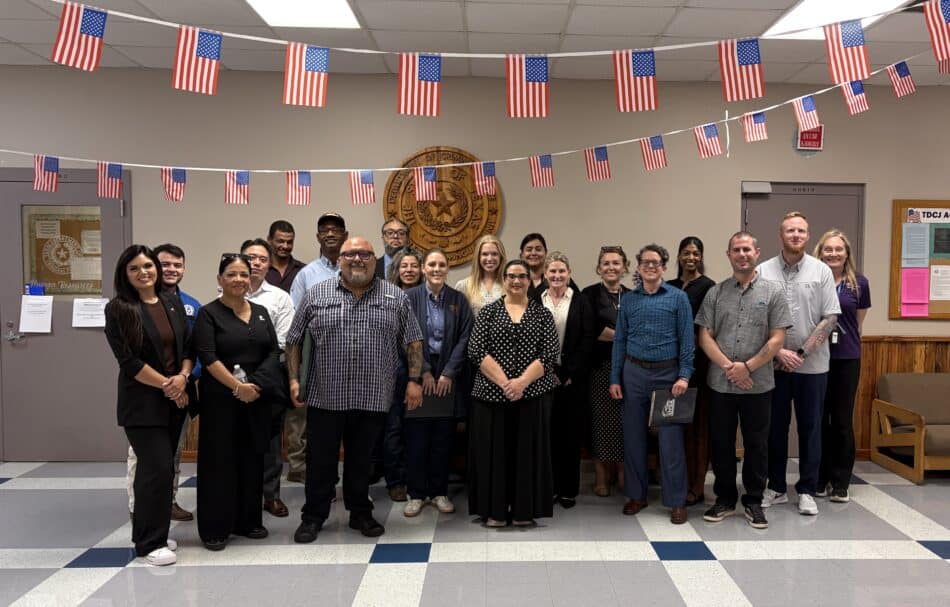
Seeing it firsthand: MI Associate Director of Workforce Innovation, Kelcie Richart, attended the project’s kickoff in June, touring two Texas Department of Criminal Justice facilities and meeting with coalition partners. The facilities, she said, felt more like schools than correctional institutions.
- In a hands-on classroom, students learned manufacturing fundamentals and soft skills that employers look for when hiring.
- “This population is interested in manufacturing careers and getting a level of skills equivalent to other talent pipelines. We need to help manufacturers see that,” said Richart.
A preview, not a one-off: The project demonstrates what’s possible when workforce leaders look in every direction for talent. Vera plans to expand the model to other states, strengthening talent pipelines nationwide.
- The MI will continue to bring the right partners and proof points to the table to help these pipelines become the norm.
- “Vera is excited to partner with the MI to bring manufacturers to the table,” said Allan Wachendorfer, Vera’s Associate Director leading the project. “This is an opportunity to build a talent pipeline that helps businesses meet their hiring demand while giving people returning home from incarceration a real shot at success.”
Dig deeper: Explore the MI’s second chance hiring resources, including an employer guide for building a second chance hiring initiative.
- Revisit the MI’s April Solution Series event, which focused on second chance hiring strategies with insights from TTTX and JBM Packaging.