Understanding FAME USA: Q&A with National Director Tony Davis
As manufacturers continue to face persistent talent challenges, FAME—the Federation for Advanced Manufacturing Education—offers a proven, employer-led approach to developing the skilled technicians that modern operations require.
In this Q&A, FAME USA National Director Tony Davis addresses key questions about how FAME operates, who it serves and the role it plays in strengthening the manufacturing workforce nationwide.
What makes FAME different from—and better than—other apprenticeship models?
“FAME is different because it is truly employer-led and built around shared accountability—with employers, community partners, and a college partner working closely together to execute. Employers don’t just host apprentices—they have input on the curriculum, set expectations, and hold one another to a common standard. That structure creates consistency, rigor, and relevance that many one-off or compliance-driven apprenticeship models struggle to achieve.
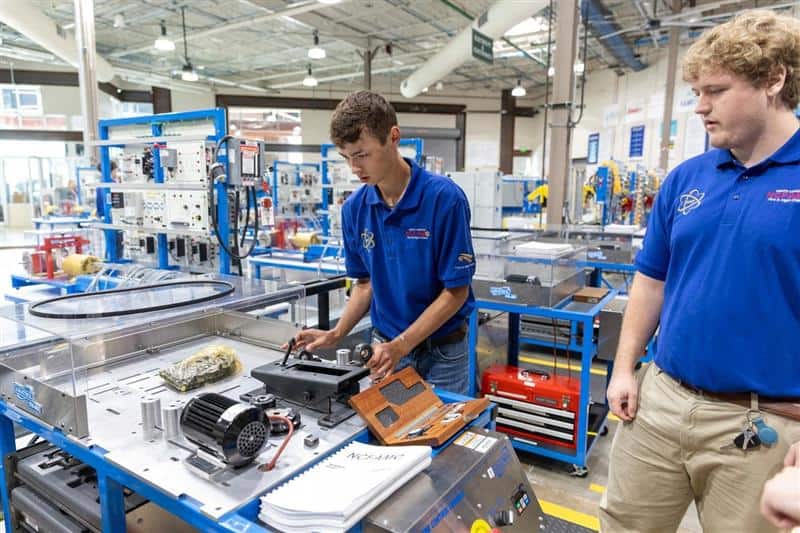
FAME students become high quality manufacturing professionals throughout the two-year program, and the program has an 85% on-time graduation rate. Additionally, 95% of FAME graduates continue working with their sponsoring company after graduating. 87% still work with their sponsoring employer three years later.”
What do employers get out of participating in FAME?
“Employers gain access to a reliable pipeline of highly skilled, work-ready technicians who understand their culture, expectations and operations. Just as importantly, employers benefit from peer learning, shared problem-solving and a long-term workforce strategy that reduces risk and acknowledges that talent development is a shared responsibility.”
What specific roles does FAME train for?
“FAME’s flagship program trains Advanced Manufacturing Technicians (AMTs)—highly skilled, multiskilled maintenance technicians. These roles support advanced manufacturing operations by maintaining equipment, improving reliability, solving problems and contributing to continuous improvement. As the model evolves, FAME is also expanding into additional technical pathways aligned with employer demand.”
How are FAME students identified and recruited?
“Students are most often traditional graduates, meaning they are recruited during their senior year of high school to begin the program immediately following graduation. While about 75% of students are traditional graduates, the other 25% are usually incumbents—individuals already employed by the FAME employer.”
How do FAME chapters operate?
“Each FAME chapter is comprised of a local collaborative of employers, local partners, and their respective college partner, who meet regularly to inform decisions that move the program forward. Employers share responsibility for student selection, curriculum alignment and continuous improvement. This collaborative structure is one of FAME’s greatest strengths—it creates peer accountability and long-term commitment.”
Which employers can participate in FAME?
“All manufacturing employers can participate in FAME. The FAME model is designed to accommodate manufacturers of any size; in fact, the ability to take on more, or fewer students each year, as needs dictate, is a key benefit of the model.”
How can employers join a FAME chapter?
“Manufacturers can first check if they have a local chapter by seeing the list of program locations on the FAME website. Reaching out to FAME USA is a great way to get introduced to local chapter leadership. Chapter leadership typically sets up a time to meet to further align on FAME being the right solution for your needs.”
What investments are required to join a FAME chapter?
“Employers invest time and funds. The leaders that will be engaged with chapter activities the most—usually HR and maintenance leaders at the site—will need to be identified and trained. The training is free, online, asynchronous and takes about 90 minutes. It ensures they understand the model, expectations, and their role in supporting the chapter and their respective students.
Once engaged with the chapter, employer representatives will support chapter activities and support financially. While the cost varies by local chapter budget, employers can expect between $500 and $2,500 in annual dues.”
How can employers start a FAME chapter?
“Starting a chapter begins with a group of committed employers who recognize a shared talent need and are willing to work together to address it. Sustainable chapters are our goal at FAME USA, so we consider the ability of a group of employers and a community college partner to recruit, sponsor and train approximately 20 students each year. FAME USA supports this process through structured guidance, training and the FAME Academy, which prepares employer collaboratives to launch and operate high-quality chapters. Our first step is convening stakeholders to discuss the model in depth and decide whether to move forward with adoption.
We are currently accepting proposals for the new FAME Catalyst Grant, which provides funding and support for regional organizations to establish local FAME chapters. Employers are encouraged share this opportunity with their local and regional economic development organizations, chambers of commerce and manufacturing associations. Learn more on FAME’s website.”
What investments are required to start a FAME chapter?
“Employers, in collaboration with community college partners and local partner organizations, invest time, with a designated ‘champion’ (usually an HR or maintenance lead) providing peer communications and working with FAME USA to build local awareness in support of chapter start-up.
Once the chapter has been established, all stakeholders participate in structured training through the FAME Academy, an online training course run by the MI. It requires about three hours a month over a six-month period to complete and covers governance, student selection, work-based learning and continuous improvement. This ensures stakeholders are prepared to operate the program consistently and effectively.
Employers also contribute to the shared costs of operating the program. Importantly, these investments are collective—no single employer carries the burden alone.”
How long does it take to start a FAME chapter?
“From initial interest to enrolling the first cohort, it typically takes 12 to 18 months. That time is intentional—it allows employers to align, build trust, establish strong partnerships with a community college and partner organizations and ensure the chapter launches with a solid foundation.”
What role does the Manufacturing Institute (MI) play in overseeing FAME?
“The MI serves as the national home for FAME, providing structure, support and stewardship for the FAME USA network and training used by FAME chapters. We help ensure consistency across chapters while preserving the flexibility employers need to meet local and regional workforce needs.”
How does MI ensure that FAME is performing at its best across the nation?
“MI does this through training, technical assistance, data collection, and a growing Quality Assurance framework. By setting clear expectations, sharing best practices and continuously learning from the network, we help chapters maintain high standards and improve over time—while staying grounded in employer leadership.”
How can employers learn more about FAME?
“Employers are encouraged to join my monthly FAME 101 virtual session. This 90-minute presentation offers a deep dive into the model and explains the first steps to chapter creation. Registration is required.”
Ready to bring FAME to your community? The MI is seeking proposals from organizations interested in establishing a FAME chapter in their region. The selected organizations will receive funding and support to build a coalition of local manufacturers and community college partners committed to launching the chapter, and to identify a community college willing to be the education partner. Proposals must be submitted to the application portal by April 10, 2026. Learn more and apply here.