Constellium Found Its Workforce Answer in FAME
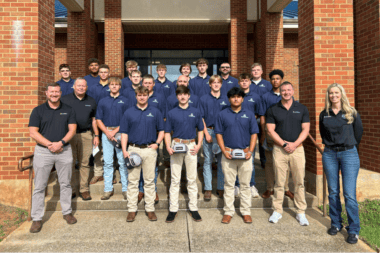
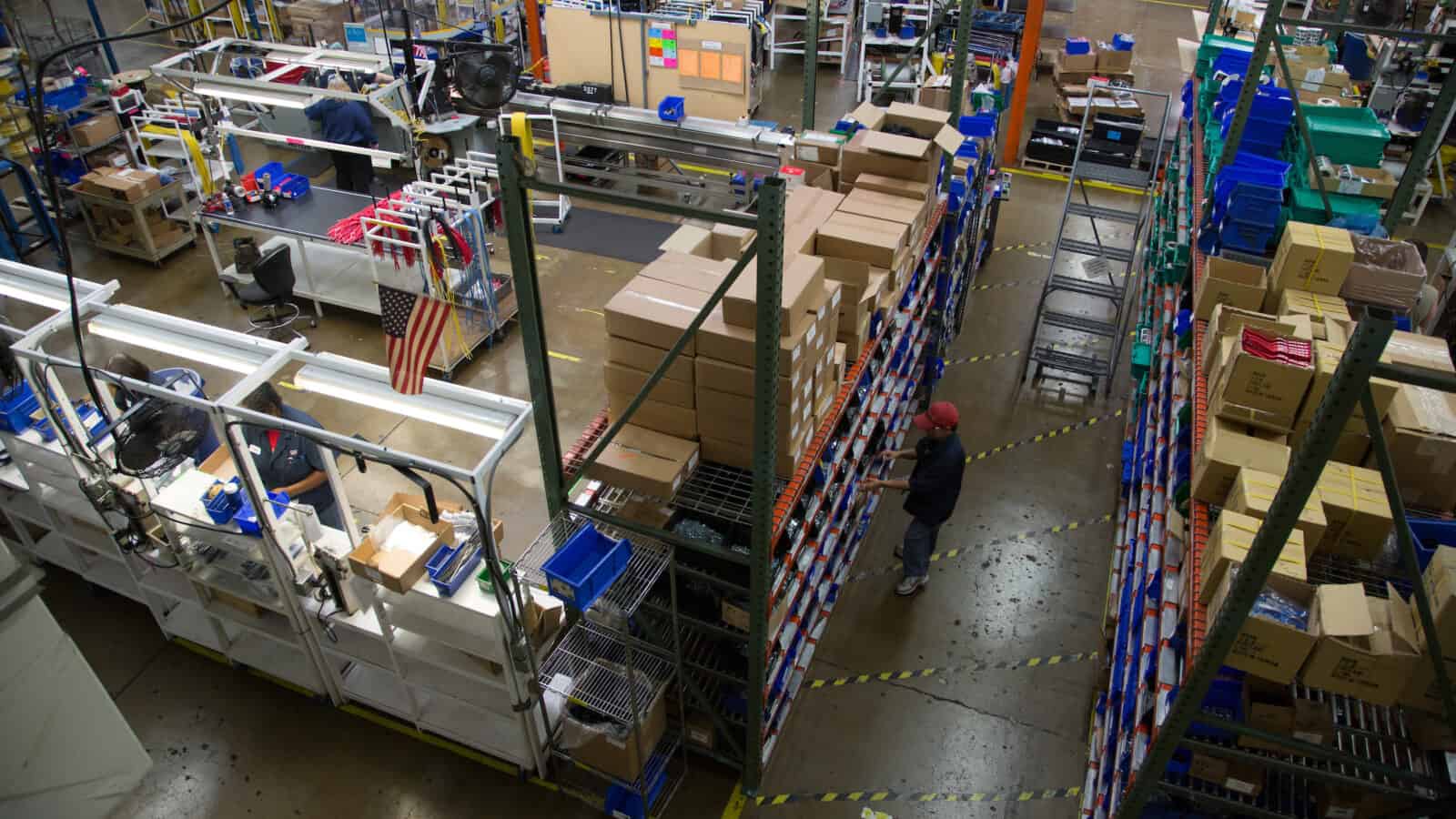
What began as a company’s last-minute decision to join the Alabama FAME Shoals Chapter has grown into one of the chapter’s strongest employer partnerships. Today, Constellium, an aluminum manufacturer with a plant in Muscle Shoals, sponsors 35 Advanced Manufacturing Technicians (AMTs) and has hired 35 graduates full-time, creating a reliable talent pipeline as experienced employees retire.
What is FAME: FAME, the Federation for Advanced Manufacturing Education, is the premier American model of manufacturing skills training. Managed and supported by the Manufacturing Institute, the National Association of Manufacturers’ 501(c)3 workforce development and education affiliate, FAME helps manufacturers develop a pipeline of highly skilled AMTs.
- FAME students complete a rigorous full-time earn-and-learn program where they attain associate degrees, attending classes at their partner community college two days a week while working for their sponsoring employer three days a week.
Building a talent pipeline: In 2019, Constellium recognized that upcoming retirements would create critical workforce gaps. Although initially skeptical, Constellium decided to join the AL FAME Shoals chapter after learning about the chapter’s first signing day.
- Kim Sizemore, Maintenance & Reliability Training Manager, selected three students who had yet to be sponsored. They excelled in the program and two of them are still with Constellium today and have advanced to supervisors.
Growing and retaining: Following the proven success of the first cohort, Constellium quickly expanded its FAME footprint. They sponsored about 10 students in each subsequent cohort before increasing to 25 students in the latest class, bringing their total active AMTs to 35.
- According to Sizemore, 90% of Constellium’s sponsored students stay after graduation. She credits that success to intentionally placing graduates in roles aligned with their interests and long-term career goals.
- As Constellium’s investment in FAME grew, so did Sizemore’s. She now serves as President of the AL FAME Shoals chapter.
The FAME difference: FAME graduates are multi-skill technicians with electrical and mechanical skillsets. Previously, Constellium hired separate technicians for each discipline, but now FAME simplifies and strengthens their floor operations in addition to filling workforce gaps.
- The impact extends beyond the shop floor. FAME gives individuals the opportunity to build rewarding careers in their communities and earn competitive wages.
- For Sizemore, the value of FAME is clear: “It’s a win for the employer, the FAME chapter and the community all together.”
The last word: “The FAME model works best when employers like Constellium go all-in, investing real time and leadership the way Kim and her team have,” said Tony Davis, FAME USA National Director. “That kind of commitment is what builds sustainable talent pipelines.”
Get involved: Visit FAME USA’s website to learn more about how manufacturers and educators can get involved with FAME. Also explore this Q&A with Tony Davis to learn more about how the FAME model operates.
Caterpillar to Scale Workforce Investment Across Texas
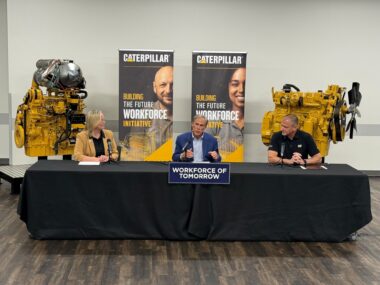
Manufacturers in Seguin, Texas, know firsthand that building a strong workforce takes investment. In 2022, the Caterpillar Foundation and other local employers launched a new Federation for Advanced Manufacturing Education (FAME) chapter with the support of the Manufacturing Institute, the NAM’s workforce development and education affiliate. Now, Caterpillar is collaborating with the MI and other organizations to expand their talent development efforts statewide.
The investment: Last week, Caterpillar announced its Texas workforce commitment as part of its five-year, $100 million Building the Future Workforce Initiative. The initial investment of up to $5 million will prepare current and future workers across Texas for advanced manufacturing and industry technician jobs.
- Texas is home to 6,630 Caterpillar employees across 17 facilities, including the 1.7-million-square-foot engine facility in Seguin, where the announcement took place.
- Partners like the MI, Texas State Technical College and Seguin Economic Development Corporation will help advance the effort.
Why it matters: As many as 1.9 million manufacturing jobs risk going unfilled by 2033 if the industry’s skills gap is not addressed. By collaborating with organizations like the MI, Caterpillar is investing in proven models to close that gap, securing a strong future for manufacturing.
- Founded by Toyota and led by the MI since 2019, FAME is a crucial part of many manufacturers’ workforce strategies, offering earn-and-learn apprenticeship programs that train their next generation of talent.
Pipelines at work: This isn’t Caterpillar’s first investment in Texas’ workforce. The Caterpillar Foundation helped launch the TX FAME Lone Star Chapter, opening apprenticeship-style pathways to advanced manufacturing careers in Seguin. The chapter was recently named a Top Performing FAME Chapter for its outstanding alignment with FAME’s rigorous standards.
- To open the chapter, the MI, the Caterpillar Foundation and other partners brought a TSTC satellite campus to Seguin. Demand has been so strong that TSTC is now building a permanent campus to train even more of the region’s manufacturing workforce.
- The Caterpillar Foundation also previously backed the MI’s Heroes MAKE America initiative, helping build new manufacturing pathways for veterans and transitioning service members.
Gov. Abbott takes note: Texas Gov. Greg Abbott joined the groundbreaking ceremony and celebrated the investment, which was covered by The Seguin Gazette, San Antonio Express-News and the local CBS affiliate.
The last word: “The Caterpillar Foundation’s investment in Seguin was the catalyst that built one of the strongest FAME chapters in the country,” said FAME USA National Director Tony Davis, who attended the announcement event. “Caterpillar’s commitment to workforce development changes lives, and we’re proud to keep growing this partnership across Texas.”
J&J Invests $1 Billion to Expand Jacksonville Manufacturing
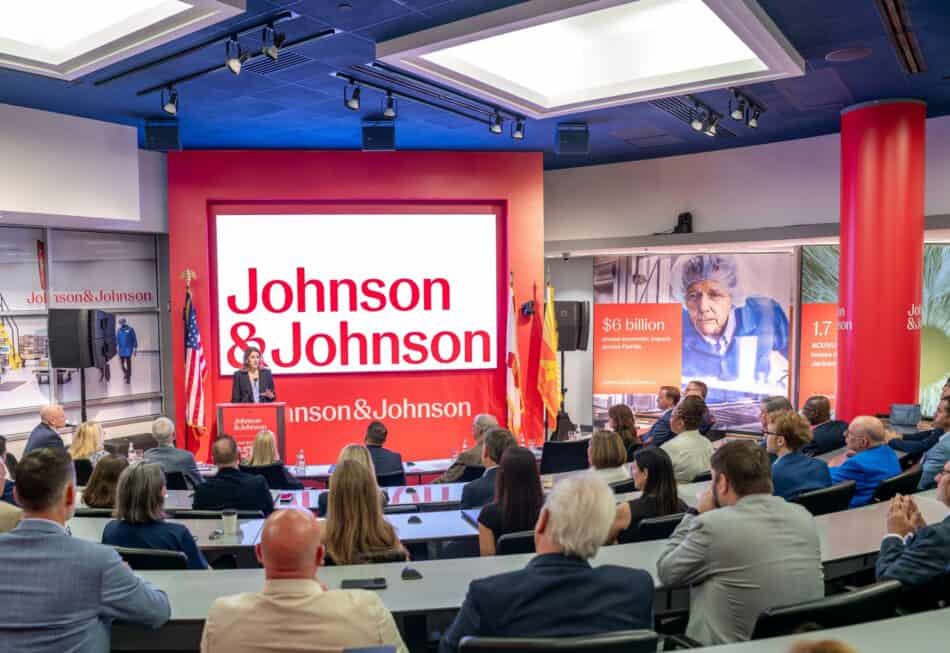
Johnson & Johnson announced an investment of more than $1 billion in Jacksonville, Florida, demonstrating confidence in American manufacturing and the workforce needed to sustain it.
The announcement: The investment will strengthen J&J’s Vision operations by scaling manufacturing, packing and distribution capabilities in Northeast Florida. This includes construction of a new, state-of-the-art distribution facility, slated to be fully operational in 2028.
- This investment is part of J&J’s previously announced $55 billion investment in U.S. manufacturing, research and development and technology through 2029.
The event: The news was announced by J&J Chairman and CEO Joaquin Duato at an event in Jacksonville on June 15. In attendance were Manufacturing Institute President Carolyn Lee, members of Congress, Jacksonville Mayor Donna Deegan and other local leaders.
- In her remarks, Lee emphasized the urgency of addressing the manufacturing workforce gap and the critical role employers play in developing the skilled talent needed to support long-term growth and competitiveness.
- She highlighted Johnson & Johnson’s leadership in bringing employers, educators and community partners together to build sustainable talent pipelines.
Building new pipelines: J&J and the MI, the NAM’s workforce development and education affiliate, are working on plans for a new FAME chapter that would benefit the Jacksonville region.
- The Manufacturing Institute’s FAME, the Federation for Advanced Manufacturing Education, is an earn-and-learn apprenticeship program that trains the next generation of manufacturing talent.
- FAME has more than 45 chapters in 17 states. The network is anticipated to grow by more than 15 chapters over the next several years.
Pipelines at work: Since 2021, J&J has been the official health care supporter of the MI’s Heroes MAKE America initiative, which prepares transitioning service members and veterans for new careers in the industry. Jacksonville is home to a significant military and veteran population, making it a natural fit for HMA’s work at nearby Fort Stewart.
- J&J is an active participant in HMA career fairs and facility tours.
From the MI: “Johnson & Johnson understands that a facility is only as strong as the people inside it,” said Lee. “Their investment in Jacksonville, paired with their long-standing commitment to workforce development, is a model for what manufacturing leadership looks like today.”
Get involved: Learn more about how you can tap into FAME’s global-best training resource and HMA’s talent pool.
The AI Opportunity Most Manufacturers Haven’t Acted On Yet
Manufacturers are increasingly clear on one point: as AI moves deeper into operations, workers will need new skills to keep pace.
The NAM Q2 Outlook Survey suggests employers are beginning to define AI readiness on the shop floor—and they are not expecting every worker to become an AI expert.
Instead, they are prioritizing practical capabilities: working alongside AI-enabled equipment, understanding AI-generated insights and applying new tools to improve day-to-day operations.
Manufacturers Are Prioritizing Practical AI Skills
When asked what AI-related skills frontline employees will need as these tools become more integrated into manufacturing processes, manufacturers emphasized practical application.
Still, nearly a quarter of manufacturers (22.6%) said it is too early to determine exactly what skills employees will need, underscoring how quickly the technology landscape is evolving.
Only a small share of respondents identified advanced AI expertise as the primary need. The results reinforce that manufacturers see AI as a practical tool workers can use to do their jobs more effectively—not as technology limited to specialized roles.
Training Efforts Are Still Catching Up
Even as manufacturers sharpen their view of future workforce needs, many remain in the early stages of building AI training programs.
Just over four in ten respondents said they do not currently provide AI-related training to frontline employees. Among those that do, most focus on introductory content that helps employees understand what AI is and how it is being used in manufacturing environments.
For manufacturers still defining their AI strategy, workforce development does not need to wait. The greatest near-term need is practical AI literacy—not advanced expertise. Foundational training can help employees build confidence with AI-enabled tools today while creating a base for more specialized training as adoption expands.
A Well-Timed Opportunity
As manufacturers work to close the gap between AI adoption and workforce readiness, practical, manufacturing-focused training will be critical—especially for the 41.4% that have yet to take action. To help manufacturers move from awareness to implementation, the MI’s AI Skills Initiative will launch new resources this fall to help employers and workers build the skills needed to use AI confidently and effectively in manufacturing environments.
The initiative is designed to equip current and future manufacturing workers with practical AI skills that reflect how manufacturers are using the technology today, including AI-enabled vision systems for quality and predictive maintenance. Because AI adoption is moving quickly, delaying workforce preparation risks widening the gap between what jobs require and what workers are equipped to do. Through workforce programs, educational partnerships and employer engagement, the initiative will help workers build the foundational and role-specific competencies manufacturers say they need most.
The survey points to a clear opportunity: manufacturers are identifying the skills workers will need to succeed in AI-enabled workplaces. The next step is making those skills accessible across the manufacturing workforce.
As AI adoption evolves, success will depend not only on the technology, but on the people prepared to use it.
Don’t Miss the MI’s Annual Workforce Summit
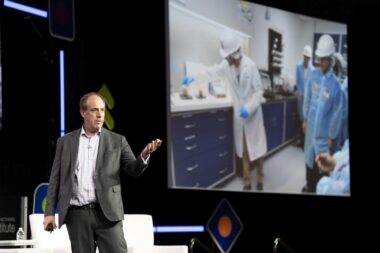
Over the past four years, the Manufacturing Institute’s Workforce Summit has brought together manufacturing leaders, practitioners and experts to explore solutions to the industry’s toughest workforce challenges. Now in its fifth year, the annual summit hosted by the MI, the NAM’s workforce development and education affiliate, promises to help manufacturers capitalize on past successes and navigate new developments, like the fast-moving adoption of AI.
What’s going on: This year’s summit, titled “Skills at Scale: Delivering America’s Competitive Advantage,” will be held Oct. 26–28 in Indianapolis, Indiana.
- Attendees will participate in sessions and interactive workshops that focus on talent pipeline development, onboarding, skills-focused training, engagement and retention, knowledge transfer, AI skills and so much more. Learn more about the sessions here.
Why attend: Ninety-two percent of past attendees rated the Workforce Summit as excellent, according to MI surveys. Attendees appreciated the opportunities to connect with peers and experts, learn best practices and brainstorm new solutions.
- “The roundtable discussions were a highlight. Honest, practical conversations about real issues employers are dealing with today,” said one manufacturer after attending a previous summit.
- “This event was incredible. It was eye-opening to realize we are not alone in the challenges we face. Hearing how others are finding success gave me new ideas and motivation,” echoed a workforce partner.
Who should attend: If you shape strategy, develop skills or build partnerships, this event is for you. The MI’s annual Workforce Summit brings together the entire manufacturing ecosystem.
Register: Register for this year’s Workforce Summit here (but hurry—discounted early bird registration ends July 17). Contact [email protected] with any questions.
Sponsor: If you’re interested in sponsoring the Workforce Summit, contact MI Senior Manager of Partnerships & Philanthropy Mitch Harle at [email protected].
Read more: Read all about the MI’s two most recent past Workforce Summits here and here.
FAME Celebrates Central Valley Chapter Signing Day with Sen. Schiff and Rep. Costa

California’s manufacturing sector has a new powerhouse for workforce development, and it’s getting federal recognition.
What’s going on: The CA FAME – Central Valley chapter celebrated its second Signing Day last week. It drew guests directly from Congress: Sen. Adam Schiff (D-CA) and Rep. Jim Costa (D-CA) were on hand to congratulate the 15 incoming students who joined the program, the first step toward becoming Advanced Manufacturing Technicians.
- The Manufacturing Institute’s FAME, the Federation for Advanced Manufacturing Education, offers earn-and-learn apprenticeship programs that train the next generation of manufacturing talent.
The tour: Sen. Schiff and Rep. Costa toured the manufacturing facilities at Reedley College—where Central Valley FAME students do the “academic” part of their program—and met with the chapter’s current AMT students.
- Sen. Schiff and Rep. Costa observed current FAME students as they delivered a Safety Circle presentation, showcasing the professionalism, technical knowledge and workplace skills central to the FAME model. Sen. Schiff highlighted his visit on social media.
- MI Chief Program Officer Gardner Carrick provided an overview of the FAME model, which combines paid work experience, classroom instruction and the development of professional skills consistently identified by employers as vital for success.
A successful investment: Both Sen. Schiff and Rep. Costa have been vocal supporters of workforce development and were able to see the benefits of investments in FAME, specifically for the Central Valley chapter.
- Earlier this year, Sen. Schiff helped secure $2.3 million in federal funding to strengthen the program at Reedley College and expand its impact across the region, ensuring Central Valley manufacturers have access to the skilled workforce needed to grow and compete.
The signing ceremony: After the tour, Sen. Schiff and Rep. Costa got to see the students sign their names on their contracts, alongside proud families, community leaders and their program’s employer partners. Afterward, they met with and congratulated these newest members of California’s manufacturing industry.
The MI says: “Watching 15 students sign their commitment alongside the support of our employer partners, Reedley College and leaders like Sen. Schiff and Rep. Costa is a powerful validation of Central Valley FAME,” said Carrick.
- “Students are preparing for rewarding careers, manufacturers are developing skilled talent, and the community is investing in its future.”
Get involved: Learn more about FAME and how you can tap into this global-best training resource. And don’t forget to follow FAME USA on LinkedIn.
The FAME National Conference Sees Record Attendance

This month in Jacksonville, Florida, the fifth annual FAME National Conference drew its largest crowd yet—a testament to the growing demand from employers for FAME-trained talent. Attendees representing FAME chapters from across the country spent three days exchanging ideas, solving problems and advancing the work of the FAME USA network.
What is FAME: FAME, the Federation for Advanced Manufacturing Education, is the premier American model of manufacturing skills training. Created by Toyota and now overseen by the Manufacturing Institute, the NAM’s 501(c)3 workforce development and education affiliate, FAME provides manufacturers with a reliable pipeline of highly skilled, work-ready Advanced Maintenance Technicians who understand their culture, expectations and operations.
- FAME students complete a rigorous full-time earn-and-learn program where they attain associate’s degrees, attending classes at their partner community college while working for their sponsoring employer.
The event: This year’s conference covered everything from artificial intelligence in manufacturing to the Quality Assurance initiative and chapter branding. The event received sponsorship support from several organizations, including Amatrol, Johnson & Johnson, CNC, Smurfit Westrock and Snap-on.
- Chapters that achieved unique successes shared their approaches in the Collective Genius session. The AL FAME Rocket City chapter explained how they doubled their employer partner count in a single year, and the TN FAME Tri-Star chapter shared how they created a study abroad opportunity for their AMTs.
- The inaugural recipients of the FAME Catalyst Grant also attended. These six new chapters will open in the fall.
The competition: A highlight of the conference was the student Manufacturing Core Exercise competition. MCEs, a key component of FAME’s curriculum, allow students to identify, implement and present innovative solutions to persistent problems in their workplaces. Six presentations were selected from across the network to compete on the conference mainstage.
- These projects deliver real-world impact. A group of Alabama FAME Shoals students working at Constellium noticed a critical motor was losing integrity due to excess dust and poor airflow. They cleaned it and sealed the room, extending its lifespan and potentially saving upward of $1.21 million in replacement costs.
The winners: Judges scored each presentation based on professionalism, presentation content, relevance to the MCEs and project impact.
- Mat Klapetek of the Alabama FAME Huntsville Tech chapter won first place in the first-year student competition. He standardized damaged and mismatched production control boxes across Discovery Body Weld’s plant floor, improving reliability and ease of preventative maintenance.
- Jefferson Hymer, Brendan Gallagher and Cody Newsome of the West Virginia FAME Kanawa Valley chapter won first place in the second-year student competition. They reduced a machine’s emergency downtime by 8.52%, saving Niterra North America nearly $5,000 per year.
- Xavier Bethea from the Michigan FAME Mitten chapter won the People’s Choice Award, as selected by the audience. He created an app that reduced the time Toyota teams spend evaluating vehicle performance data by 83%.
Join us in 2027: Next year’s conference will be in Kansas City, Kansas, May 18–20. Stay tuned for more information later this year.
Get involved: Visit FAME USA’s website to learn more about how manufacturers and educators can get involved with FAME, and check out this Q&A with FAME USA National Director Tony Davis about how the FAME model operates.
FAME Adds Six New Chapters, Bolsters AI Skills Development
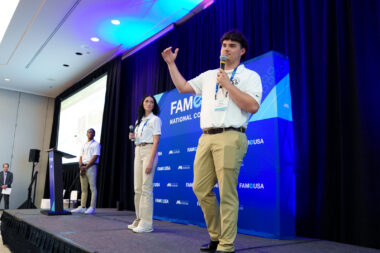
The Manufacturing Institute’s Federation for Advanced Manufacturing Education (FAME) program—the global-best workforce development program—announced the addition of six new chapters, funded by its inaugural FAME Catalyst Grants. The new chapters will be part of the MI’s new AI Skills Initiative.
The background: Founded by Toyota and led by the MI (the NAM’s workforce development and education affiliate) since 2019, FAME offers earn-and-learn apprenticeship programs that train the next generation of manufacturing talent.
- New FAME chapters are founded when local manufacturers partner with industry or economic development organizations and community colleges or technical schools.
The grants: The MI Catalyst Grants offer $50,000 in early-stage support to the sponsoring economic development organizations to fund staff time and travel involved in starting a FAME chapter.
- In total, the first grants amount to $300,000 in funding that will not only help manufacturers develop the skilled talent they need but also help students start lifelong careers in manufacturing.
- Google.org provided funding for the MI’s AI Skills Initiative, recently announcing $10 million in funding for the MI to support AI skills development in the manufacturing workforce.
The new chapters: The six inaugural recipients are:
- East County Economic Development Council in El Cajon, California;
- Carroll Tomorrow in Carrollton, Georgia;
- One Acadiana in Lafayette, Louisiana;
- Hinds County Economic Development Authority in Jackson, Mississippi;
- Greater St. Cloud in St. Cloud, Minnesota; and
- Big Country Manufacturing Alliance in Abilene, Texas.
Next steps: After building a coalition of local manufacturers along with a community college partner to support FAME chapter development, the recipients will enter the FAME Academy by October 2026 to learn how to manage the FAME Advanced Maintenance Technician program to deliver global-best results.
- Their first cohorts of students will be selected for employment at their selected company in spring 2027 and begin training and classes in fall 2027.
The big expansion: Thanks to the addition of these six new chapters, FAME’s total reach will expand to 52 chapters in 19 states. The Minnesota and Georgia chapters will be the first in their respective states.
The MI says: “With six new chapters getting off the ground—and more to follow—FAME is spanning the skills gap and providing manufacturers a workforce solution that meets the needs of today and tomorrow,” said MI President Carolyn Lee.
- “The interest we’ve seen from manufacturers and economic development organizations across the country demonstrates the success of the model. This is just the beginning,” added FAME National Director Tony Davis.
MI Grows FAME Network with Six New Chapters
Washington, D.C. – The Manufacturing Institute today announced the inaugural recipients of the FAME Catalyst Grant, which will seed the formation of six new chapters of the Federation for Advanced Manufacturing Education (FAME) as part of the MI’s new AI Skills Initiative.
FAME is the global-best workforce development program, founded by Toyota and led by the MI since 2019, that offers earn-and-learn apprenticeship programs to train the next generation of manufacturing talent. As the workforce development and education affiliate of the National Association of Manufacturers, the MI continues to lead the industry in building and strengthening the manufacturing workforce. The expansion of the FAME network comes as artificial intelligence and advanced manufacturing technology are rapidly changing the industry and its workforce needs.
Manufacturers have over 400,000 open jobs due to a long-documented skills gap. Left unaddressed, manufacturers could see 1.9 million jobs go unfilled by 2033. The new chapters will create industry hubs to help build durable talent pipelines for years to come.
To start a FAME chapter, local manufacturers partner with industry or economic development organizations and community colleges or technical schools to offer hands-on education and training to students. The MI Catalyst Grants offer $50,000 in early-stage support to the sponsoring economic development organizations to fund staff time and travel involved in starting a FAME chapter.
In total, the first grants amount to $300,000 in funding that will not only help manufacturers develop the skilled talent they need but also help students start lifelong careers in manufacturing.
The six inaugural recipients are:
- East County Economic Development Council in El Cajon, California
- Carroll Tomorrow in Carrollton, Georgia
- One Acadiana in Lafayette, Louisiana
- Hinds County Economic Development Authority in Jackson, Mississippi
- Greater St. Cloud in St. Cloud, Minnesota
- Big Country Manufacturing Alliance in Abilene, Texas
After building a coalition of local manufacturers along with a community college partner to support FAME chapter development, the recipients will enter the FAME Academy by October 2026 to learn how to manage the FAME Advanced Maintenance Technician program to deliver global-best results. Their first cohorts of students will be selected for employment at their selected company in spring 2027 and begin training and classes in fall 2027.
Once open, the chapters in Minnesota and Georgia will be the first in their states, bringing FAME’s total reach to 52 chapters in 19 states.
“As our industry continues to navigate the opportunities that come with integrating artificial intelligence into our operations, we also need to ensure that our frontline workers have the skills they need to make the most of the AI revolution,” said MI President Carolyn Lee. “With six new chapters getting off the ground—and more to follow—FAME is spanning the skills gap and providing manufacturers a workforce solution that meets the needs of today and tomorrow.”
“We are excited to see FAME continue to grow and to welcome six new chapters to the network,” said FAME National Director Tony Davis. “The interest we’ve seen from manufacturers and economic development organizations across the country demonstrates the success of the model. This is just the beginning.”
Google.org provided funding for the MI’s AI Skills Initiative, which includes the creation of a dedicated course in AI Skills for Advanced Manufacturing Technicians and will help grow the FAME network.
Background
In April, Google.org announced $10 million to the MI to support AI skills development in the manufacturing workforce.
In February, Lee gave the annual State of the U.S. Manufacturing Workforce Address, which recognized how AI is accelerating change, creating new opportunities and emphasizing the need to address the skills gap.
-The MI-
The Manufacturing Institute works to build and strengthen the manufacturing workforce for individual opportunity, community prosperity and a competitive manufacturing industry for the future. This is done through implementing groundbreaking initiatives, convening industry leaders, conducting innovative research and promoting public policy that supports the sector as it meets the opportunity of modern manufacturing. As the 501(c)3 nonprofit workforce development and education affiliate of the National Association of Manufacturers, the MI is a trusted adviser to manufacturers, equipping them with solutions to address the toughest workforce issues. For more information on the MI, please visit www.themanufacturinginstitute.org.
733 10th St. NW, Suite 700 • Washington, DC 20001 • (202) 637-3000
Biogen’s Nicole Murphy Aims to Elevate the Manufacturing Workforce

Biogen Executive Vice President and Head of Pharmaceutical Operations and Technology Nicole Murphy has spent more than three decades building a career defined by service. As chair of the Manufacturing Institute’s 2026 STEP Ahead Awards, she brought that same philosophy to one of manufacturing’s biggest celebrations of leadership.
A high-impact role: Murphy started her career as an engineer on the shop floor of a chemical plant. She was quickly drawn to the complexity of process and product development, a passion that led her to biotechnology and, ultimately, to a career focused on improving lives.
- At Biogen, Murphy leads a team responsible for developing, making and delivering medicines at the highest level of quality that support the company’s portfolio in neurology, immunology and rare disease. Her team’s work spans from early preclinical development to clinical and commercial stages, helping ensure promising science reaches patients safely and reliably.
- “I tell people often that I have the best job in the world—and I truly believe it,” said Murphy.
A defining moment: For Murphy, the work is deeply personal. During a factory tour early in her career, she met a family whose 6-year-old daughter relied on the medicine produced by the facility. The girl’s older brother quietly told her, “Thank you for getting my sister out of her wheelchair and letting her play with me again.”
- “That day reinvigorated a sense of purpose that has stayed with me, day in and day out,” said Murphy. “It has pushed me to continue to ‘raise the bar’ because the hard work we do is nothing compared to what our patients persevere through.”
Mentorship is key: Murphy attributes her success to the many role models who have supported her career, including mentors and peers. They challenged her to leave her comfort zone by taking on new responsibilities, roles and projects—and helped her grow as a leader.
- She has since paid that forward. At Biogen, Murphy started a Reverse Mentorship program that flips the traditional mentor/mentee relationship, empowering employees at all levels to mentor senior leaders.
- “The intent is to strengthen working relationships, improve our understanding of employee experience—particularly through a lens of inclusion—and help leaders gain new perspectives,” said Murphy. The result is more effective leadership, stronger teams and a thriving culture, she says.
Her leadership philosophy: Murphy believes the strongest leaders listen first, take responsibility for setbacks and make sure their teams receive the credit for success.
- “Trust, purpose and community are absolutely foundational in building the best teams,” said Murphy.
The last word: “Manufacturing succeeds when we develop and elevate diverse talent, and STEP Ahead shines a light on leaders who are shaping the future of the industry,” said Murphy.
- “It is our workforce that will create the great next invention, ensure products and services reach the people who need them and inspire the generations to come.”